INSIGHTS
High home prices can make people feel left out of wealth building. But direct real estate is not the only path — and historically, it has not been the strongest one.
The historical record is clear
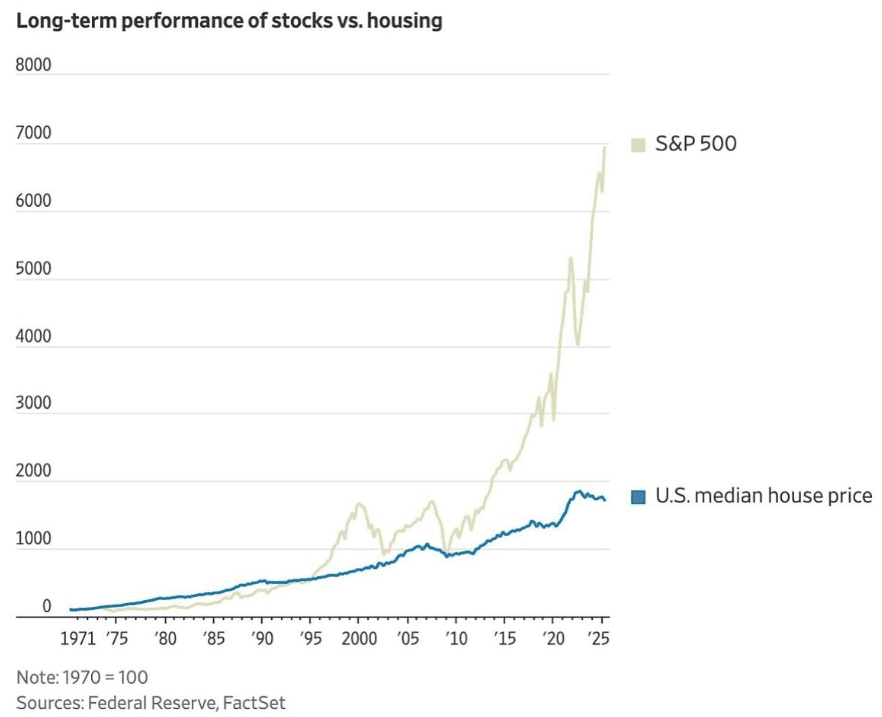
From 1928 through 2024, the S&P 500 delivered approximately 9.9% annualized total returns, including dividends, according to NYU Stern. From January 2000 to May 2026, the national Case-Shiller home-price index rose at approximately 4.7% annualized. The historical record favors diversified public equities even before factoring in property tax, maintenance, or repairs for maintaining real estate.
That difference compounds. At 9.9%, $100,000 grows to roughly $661,000 over 20 years. At 4.7%, it grows to roughly $251,000. These are historical illustrations, not forecasts — but they make one point clear: waiting for a property purchase can have a real opportunity cost.
But markets certainly feel riskier than homes
Markets feel opaque. Prices move daily, headlines are relentless, and it can be hard to know which risks matter or what to do next. Real estate feels more tangible, and a mortgage creates a forced-savings program through regular principal paydown. That appeal is understandable, but it doesn’t change the historical record. Public markets are an excellent vehicle for building wealth, it just requires a plan.
Planning turns an opaque market into a process
That is where thoughtful planning matters. Fiduciary Wealth Partners helps turn an opaque market into a disciplined process: thoughtful asset selections, clear risk limits, and a long-term structure that builds durable wealth. We do not predict the next market move. We help clients make better long-term decisions and stay invested in a plan to build meaningful wealth over time.
Sources and methodology
Equity return: NYU Stern School of Business, Historical Returns on Stocks, Bonds and Bills, 1928–2024, S&P 500 total-return series. Home-price appreciation: S&P Cotality Case-Shiller U.S. National Home Price Index, FRED series CSUSHPINSA, January 2000 index value of 100.0 and May 2026 value of 335.104; annualized rate calculated from those index values. The series measure different things: equities include reinvested dividends, while the home-price index reflects price appreciation before rent, leverage, taxes, maintenance, insurance, and transaction costs. Historical results do not guarantee future outcomes.
One research note a month.
Clear, data-driven analysis on investing, risk, and building long-term wealth. No spam. Unsubscribe anytime.